Book Now

Restore your teeth, protect what remains.

Restorative dental treatment at Sienna Smiles covers fillings, crowns, bridges, inlays, onlays, and root canal therapy — each tailored to how much healthy tooth structure remains and what your tooth needs long-term.

The suitability of any restorative treatment depends on individual assessment. Your dentist will explain the options appropriate to your situation before any procedure is recommended.

02 / Understanding Restorative Dentistry

When a tooth is damaged, early treatment matters.

Restorative dentistry covers all treatments that repair, replace, or reinforce damaged or missing tooth structure. The AIHW reports that approximately 90% of Australian adults have experienced dental caries, making restorative treatment one of the most commonly needed dental services nationwide. The goal is to restore normal function and appearance — the ability to chew, speak, and maintain oral health. Restorations range from a simple composite filling that takes 30 minutes to a full crown that requires two appointments and laboratory fabrication.

If a tooth is cracked, decayed, or missing structure, a restoration aims to protect what remains and stop the problem from progressing. At Sienna Smiles, assessment and X-rays are completed before any treatment is recommended — no procedure is proposed without first understanding the extent of the issue.

The five restorative treatments we offer each suit different situations: [composite fillings](/restorative-dentistry/dental-fillings) for early-to-moderate decay, inlays and onlays when a filling will not hold long-term, [crowns and bridges](/restorative-dentistry/crowns-and-bridges) when the tooth needs full coverage or a tooth is missing, [root canal therapy](/restorative-dentistry/root-canal-treatment) when infection has reached the pulp, and [dentures](/restorative-dentistry/dentures) for patients missing multiple teeth. Your dentist will assess which option is appropriate for your individual case.

Understanding restorative dentistry — crowns, bridges, and fillings at Sienna Smiles
03 / Treatment Types

Five treatments, one clear plan.

Each treatment below is suited to a different clinical situation. The right choice depends on how much healthy tooth structure remains, where the tooth is located, and your overall oral health.

Dental Crowns

Used when a tooth is cracked, severely decayed, or has been root canal treated.

A dental crown is a custom-fitted ceramic restoration that covers the entire visible surface of a tooth above the gumline. It is cemented permanently onto the prepared tooth, protecting the remaining structure from further fracture or decay. Crowns are recommended when decay is too extensive for a filling to provide adequate support, when a tooth is cracked or structurally compromised, or after root canal treatment when the tooth becomes brittle. At Sienna Smiles, crowns are fabricated in an external dental laboratory — the process takes two appointments across 7 to 14 days. Your dentist will assess your remaining tooth structure and confirm whether a crown is the most appropriate option before any preparation begins.

Typical timeline: 2 appointments, 7–14 days betweenLearn more

Dental Bridges

Replaces one or more missing teeth using crowns on the adjacent natural teeth.

A dental bridge is a fixed restoration that spans the gap left by one or more missing teeth. It is supported by crowns placed on the natural teeth either side of the gap, with one or more false teeth (pontics) suspended between them. Unlike a denture, a bridge is permanently fixed. A bridge may be appropriate when you have one or more adjacent teeth with sufficient structure to support crowns, or when the adjacent teeth already have significant restorations. The right approach — bridge or implant — depends on your bone density, existing tooth health, and individual circumstances. Your dentist will assess and explain the options available to you.

Typical timeline: 2–3 appointments, 7–14 days for laboratory fabricationLearn more

Composite Fillings

Restores teeth with decay or minor damage using tooth-coloured composite resin.

A composite filling restores a tooth damaged by decay by removing the affected material and replacing it with tooth-coloured composite resin bonded directly to the tooth structure. Composite resin is the standard filling material at Sienna Smiles — it matches the natural colour of your tooth and bonds directly, requiring less removal of healthy tooth structure than older materials. Fillings are typically completed in a single appointment. The cost is determined by the number of surfaces involved: a simple one-surface filling on a posterior tooth differs from a complex three-surface filling. Your dentist will assess the extent of decay at your check-up and confirm the appropriate approach, including whether a filling is sufficient or whether an inlay or crown would provide better long-term durability.

Typical timeline: 1 appointment (30–60 minutes)Learn more

Inlays and Onlays

Restores larger cavities that exceed what a direct filling can reliably support.

Inlays and onlays are indirect restorations — fabricated in a dental laboratory and then bonded to the tooth, rather than placed directly chairside like a filling. An inlay fits within the cusps of a posterior tooth; an onlay covers one or more cusps and is sometimes called a partial crown. They are used when a cavity is too large for a direct composite filling but the cusp structure is still intact enough that a full crown would remove more healthy tooth structure than necessary. When the cusps of a tooth are intact and healthy, an inlay or onlay is a more conservative option. The process takes two appointments: decay removal and preparation at the first, and placement of the laboratory-fabricated piece at the second.

Typical timeline: 2 appointments, 7–14 days for laboratory fabrication

Root Canal Therapy

Removes infected or inflamed pulp to preserve a tooth that would otherwise require extraction.

Root canal therapy removes infected or inflamed pulp tissue from inside the tooth root canals and seals them to prevent reinfection. It is a restorative procedure because it preserves the natural tooth — the alternative is extraction. Treatment is carried out under local anaesthetic. Local anaesthetic is used to minimise discomfort — most patients report pressure and movement rather than discomfort during the procedure. Symptoms that typically indicate root canal is needed include spontaneous throbbing pain, prolonged sensitivity to hot or cold, swelling near the tooth, or darkening of the tooth. After treatment, a crown is typically recommended to protect the brittle root-treated tooth. The number of appointments varies by tooth type and infection severity — most cases require one to two appointments.

Typical timeline: 1–2 appointments (complex cases may require 3)Learn more

The suitability of any restorative treatment depends on individual assessment. Your dentist will discuss options specific to your situation.

Not sure which treatment you need?

Book a consultation at Sienna Smiles. Your dentist will examine the tooth, take X-rays where indicated, and explain the options — with a written cost estimate — before any decision is made.

05 / Your Treatment Journey

What to expect at each step.

01

Clinical Assessment and X-Rays

30–60 minutes

Your dentist examines the affected tooth or area, takes digital X-rays to assess the extent of any decay or damage, and reviews your dental history. Where significant work is planned, a thorough oral health assessment ensures the treatment approach is appropriate for your overall dental health.

02

Treatment Plan and Written Cost Estimate

Included in assessment appointment

Based on the assessment findings, your dentist recommends a treatment approach and explains the options available. You receive a written cost estimate before any procedure begins — including any additional work that may be needed, for example a crown after root canal treatment. No treatment proceeds without your informed consent.

03

Preparing the Tooth

45–90 minutes depending on treatment type

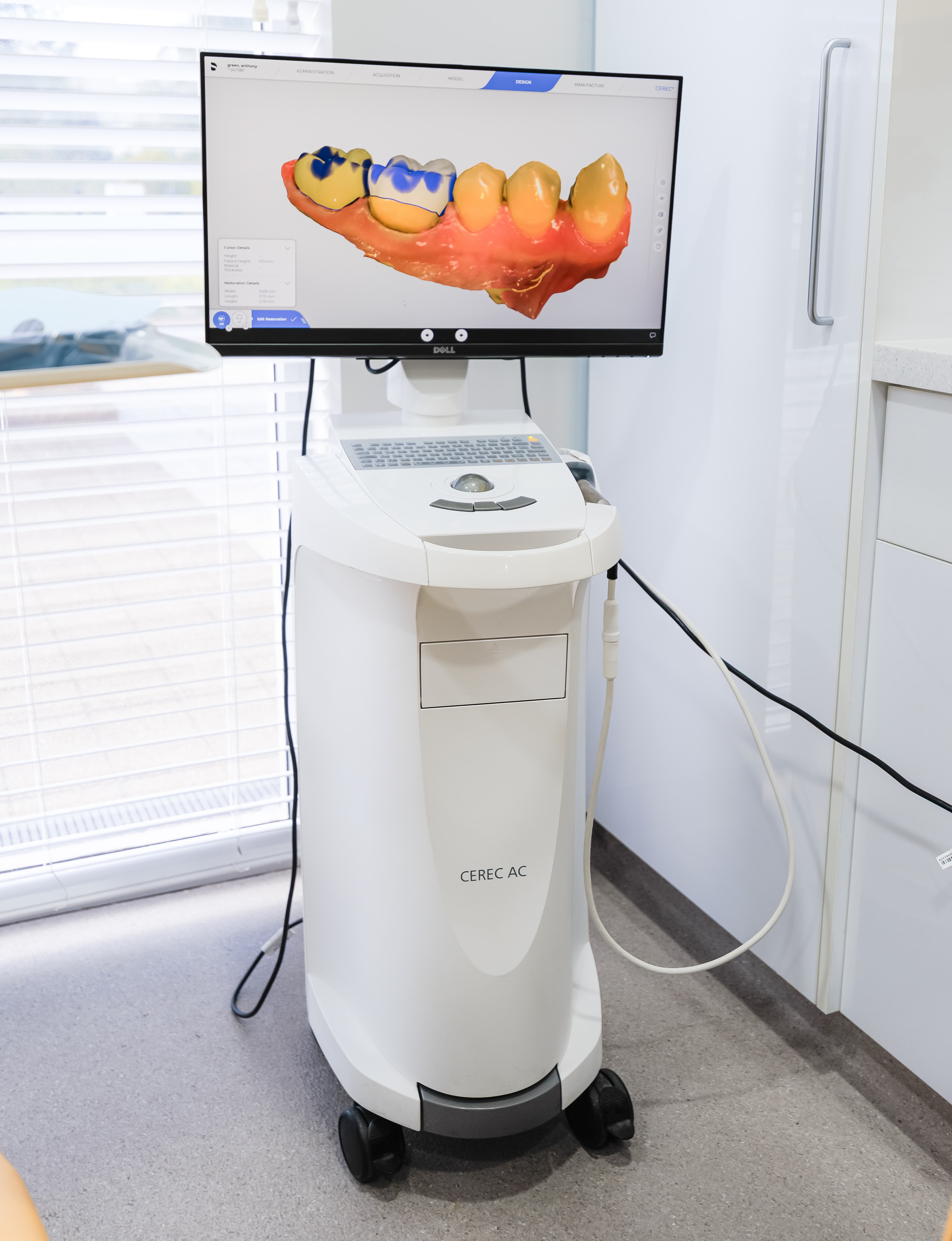
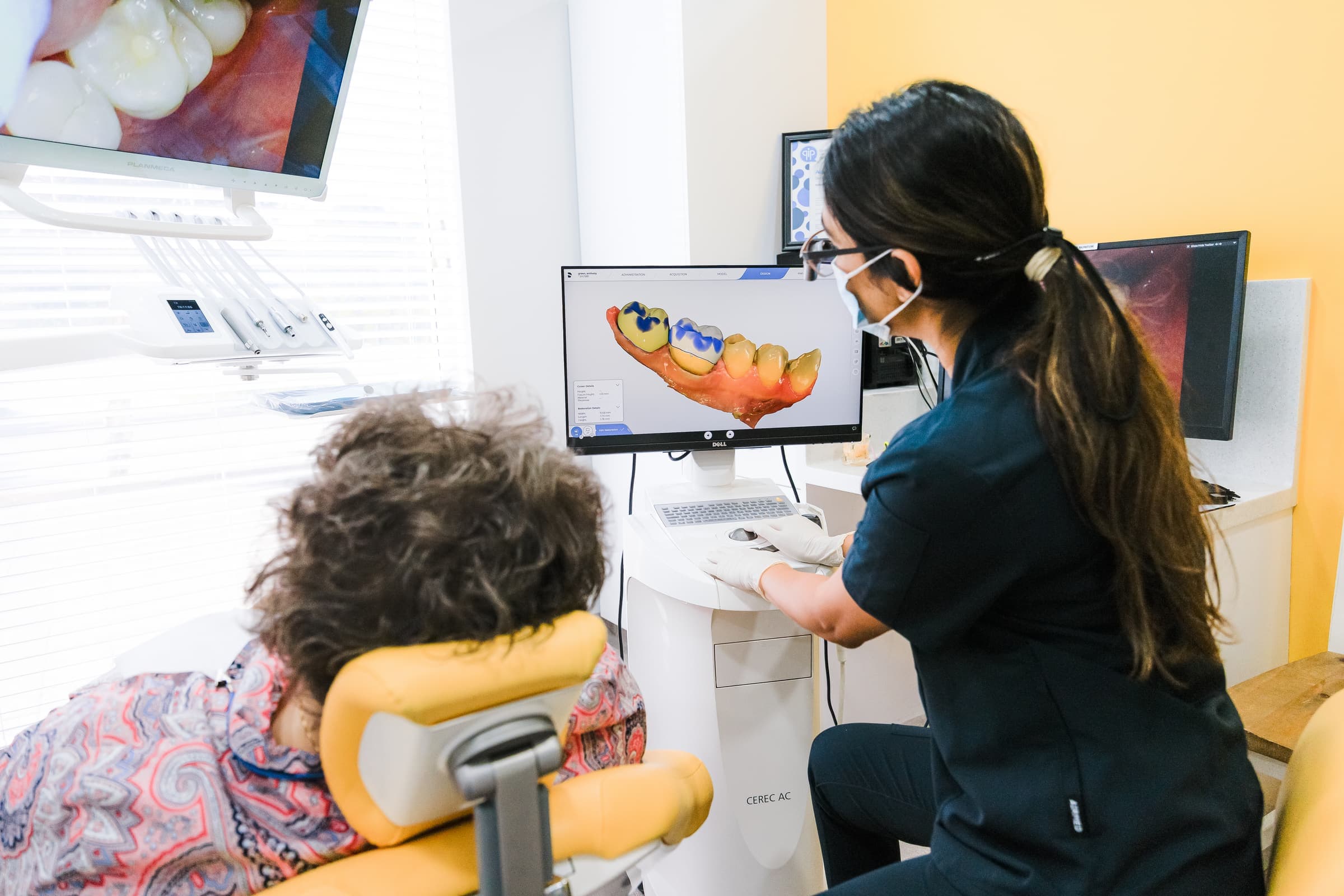
The affected area is anaesthetised with a local anaesthetic injection. For fillings and small inlays, treatment often starts at this visit. For crowns, bridges, and inlays or onlays, the tooth is shaped and prepared, and either a digital scan or a physical impression is taken. A temporary restoration is placed while the laboratory fabricates your final piece.

04

Placing the Restoration

45–75 minutes

For direct restorations such as fillings, the composite is placed, shaped, and cured at the same appointment. For indirect restorations — crowns, bridges, inlays, and onlays — the temporary is removed and the final laboratory-fabricated piece is checked for fit and shade match, then permanently cemented. Your bite is adjusted and checked before you leave.

05

Review and Ongoing Care

Included in your next check-up

Most restorative treatment is reviewed at your next scheduled check-up. Your dentist will check the restoration, assess any adjacent teeth, and confirm the treatment is functioning correctly. Good oral hygiene and regular six-monthly check-ups are the most effective way to extend the life of any restoration.

07 / Treatment Outcomes
Before Treatment
Clinical photograph — coming soon
After Treatment
Clinical photograph — coming soon

Clinical photography for restorative treatments will be available following our next professional photography session. Each case is unique — your dentist will discuss expected outcomes during your consultation.

08 / Common Questions

Questions we hear often.

Answers reviewed by Dr Singh, AHPRA DEN0001639626.

Ready to restore your smile?

Book a consultation at Sienna Smiles. Your dentist will examine the affected tooth, take X-rays where indicated, and provide a written treatment plan and cost estimate — before any procedure is recommended.

Restorative dental treatment involves clinical assessment. Suitability, expected outcomes, and alternatives are discussed in full before you consent to any treatment.